Kuan Yin, Chinese Bodhisattva of Compassion

Kuan Yin, also known as Guanyin or Avalokiteśvara in Sanskrit traditions, is the compassionate hearer of cries—an embodiment of mercy and unconditional forgiveness. She is revered across Chinese, Japanese, and other East Asian spiritual paths as the one who responds to the suffering of all beings. While often depicted in feminine form, her essence transcends gender, symbolizing pure empathy and the boundless nature of grace.
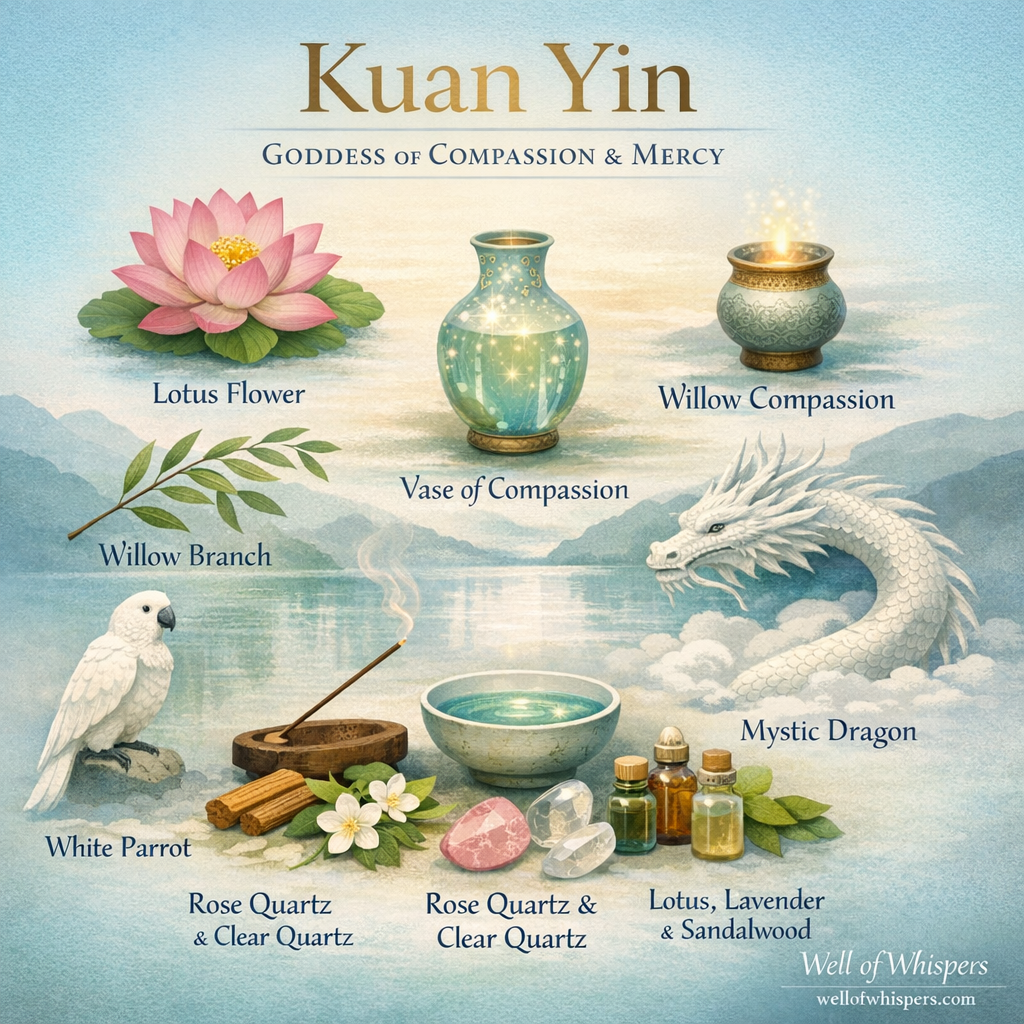
Associated symbols of Kuan Yin include the lotus flower—representing purity unstained by the mud of human error—and the vase she carries, filled with the nectar of compassion that soothes sorrow. The willow branch she sometimes holds is a sign of flexibility and healing, bending but never breaking under the weight of hardship. Animals linked to her presence include the white parrot and dragon, both symbols of purity, wisdom, and freedom from fear.
Herbs and botanicals connected to Kuan Yin include white lotus, jasmine, and sandalwood, all used to invoke tranquility and peace of mind. Crystals like rose quartz and clear quartz are said to resonate with her healing energy, while oils such as lotus, lavender, and neroli are traditionally used in devotional practices to open the heart.
In traditional temples, devotees honor Kuan Yin with offerings of fresh flowers, bowls of water, and gentle incense smoke that carries their prayers upward. Her worship emphasizes compassion in action—the idea that kindness and forgiveness are not passive virtues but active efforts to ease the burdens of others. Chanting her name or the mantra associated with her meditation, “Om Mani Padme Hum,” has long been a way of calling compassion into one’s life and environment.
For a modern spiritual practice at home, a simple act can reflect her teachings: light a candle beside a glass of clear water, symbolizing illumination and emotional clarity. Take a quiet moment to acknowledge judgments or resentments you may hold—toward yourself or others—and consciously release them into the water with an intention for forgiveness and understanding. Afterward, use the water to nourish a plant, returning the act of letting go to the living world.
Through small gestures of mercy—whether silent, symbolic, or tangible—we draw closer to the inner peace that Kuan Yin embodies. Her lesson is timeless: true strength lies in gentleness, and the heart that forgives becomes a vessel of light for all beings.