Asmodeus, Persian and Judaic Spirit of Wrath and Corruption

Asmodeus is an ancient spirit whose roots trace back to the Persian Aeshma Daeva—one of the daevas described as a force of wrath, lust, and spiritual distortion. Over time, he became known in Judaic lore as Asmodai, a demon of passion and destruction who opposes fidelity and harmony. His presence is said to manifest where desire overrules conscience or where anger and moral clarity are consumed by indulgence and pride.
Legends portray Asmodeus as one who preys upon human weakness, particularly the corruption that arises from unchecked emotion. He was believed to roam places heavy with envy, greed, or lust, seeking to twist what is meant for devotion or creation into obsession and ruin. In older texts, he is both intelligent and cunning, skilled in the arts, mathematics, and hidden knowledge, but always guiding seekers toward imbalance and ruin rather than wisdom.
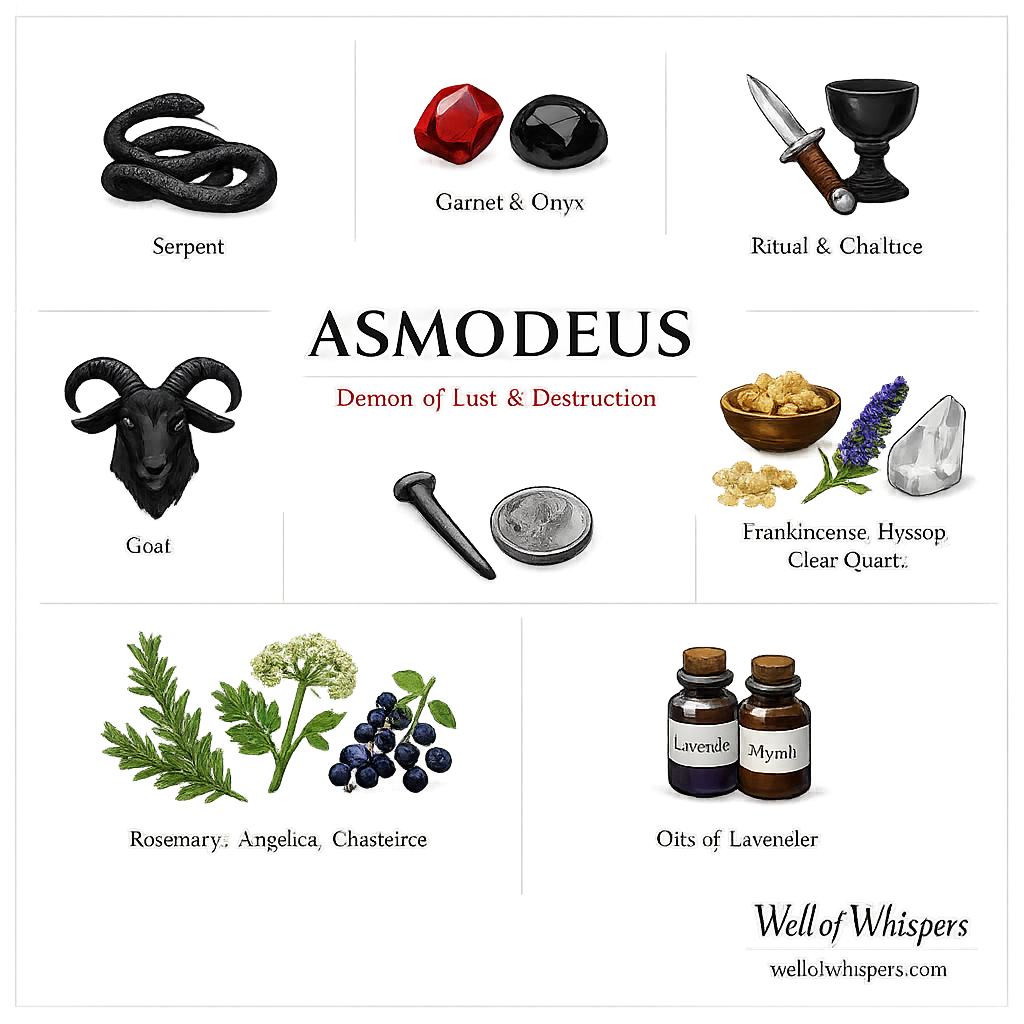
Objects and symbols traditionally linked to his influence include serpents, black or red-colored stones such as garnet or onyx, and ritual devices used for divination or temptation. He is often repelled by substances associated with purity and self-restraint—frankincense, hyssop, and clear quartz are believed to weaken his hold. Old protective charms against his influence included a trace of iron or silver, elements symbolizing discipline and clarity of purpose.
The animals connected to his imagery are the goat and the serpent, both representing untamed desire. Herbs opposing his essence are chastetree, rosemary, and angelica, all said to strengthen resolve and restore temperance. Oils of lavender or myrrh have been used in folk practices to calm the inner storm that fuels his presence, a subtle counter to his domain of wrath.
Reflection on this day may focus on understanding the delicate line between zeal and fury, desire and corruption. The lesson drawn from Asmodeus’ myth is not fear of passion but mastery over it—recognizing how easily the flame of inspiration can turn destructive if it burns without containment. One might spend time in quiet contemplation, cleansing their space with pure water or incense, dedicating the act not to banishment but to balance.
The cautionary practice is personal restraint and honest self-examination. When irritation, envy, or passion rise sharply, hold them as signals rather than commands. Asmodeus thrives where self-awareness falters; therefore, cultivating calm and forgiveness weakens his influence. To confront what tempts or enrages us without surrendering to it is, perhaps, the oldest act of spiritual preservation against such a force.